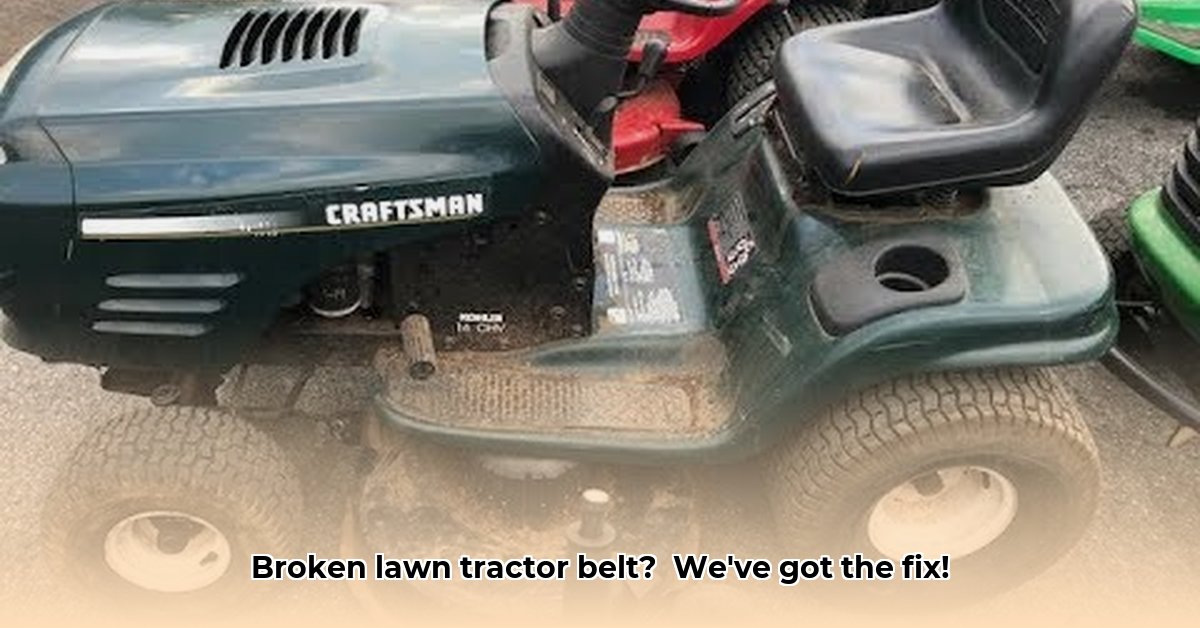
That satisfying "vroom" of your Craftsman lawn tractor suddenly silenced? Don't despair! A worn-out belt is a common, easily fixable problem. This guide will walk you through diagnosing the issue, selecting the right replacement (we'll delve into OEM vs. universal options), and safely installing it yourself. We'll also provide tips for extending the life of your new belt and troubleshooting common problems. Let's get your mower running smoothly again! For additional help, check out this helpful resource on Craftsman attachments.
Is Your Belt in Trouble? Recognizing the Signs
Before rushing to the hardware store, let's confirm the belt is the culprit. Several telltale signs indicate a worn or failing Craftsman lawn tractor belt:
- Cracked and Frayed Edges: Inspect the belt closely. Tiny cracks are early warning signs; frayed edges are a clear indication of a failing belt. Replacement is necessary.
- Slipping: Does your mower struggle under load (e.g., hills, thick grass)? This suggests a slipping belt not efficiently transferring power.
- High-Pitched Squeal: A loud squeal or squeak from the engine area often points to a worn, damaged, or misaligned belt.
- Visible Damage: Check for cuts, gouges, or other obvious wear. Even small damage weakens the belt significantly. Don't ignore these!
Choosing the Right Belt: OEM vs. Universal
This is a crucial decision: Original Equipment Manufacturer (OEM) or a universal replacement?
OEM belts, made specifically for your Craftsman model, guarantee a perfect fit and optimal performance. They often maintain warranty coverage. However, they usually cost more.
Universal belts are budget-friendly alternatives. They might require adjustments and could potentially void your warranty. Performance may vary and the lifespan might be shorter compared to an OEM belt.
Comparison Table:
| Feature | OEM Belt | Universal Belt |
|---|---|---|
| Cost | Higher | Lower |
| Fit | Guaranteed perfect fit | May require adjustments; may not fit perfectly |
| Warranty | Usually maintains warranty coverage | May void warranty; check manufacturer's policy |
| Performance | Optimized for your mower | Performance may vary; potentially less efficient |
| Longevity | Generally longer lifespan | Possibly shorter lifespan |
Finding the Right Part: Always consult your owner's manual for the correct part number. Lowe's and other home improvement stores stock both OEM and universal belts. Carefully compare part numbers to ensure a proper fit. Using the correct part number is critical for a successful repair.
Replacing Your Belt: A Step-by-Step Guide
Safety First! Disconnect the spark plug to prevent accidental starting and injury.
- Locate the Belt: Your owner's manual provides a diagram showing belt routing.
- Release Tension: Most Craftsman tractors have a tensioner pulley. Loosen it to release belt tension. Avoid forcing; it can damage components.
- Remove Old Belt: Carefully guide the old belt off the pulleys, following the diagram.
- Install New Belt: Reverse the removal process, ensuring the new belt sits correctly in all grooves.
- Re-establish Tension: Tighten the tensioner pulley to the manufacturer's specifications (found in your manual). Don't overtighten.
- Reconnect Spark Plug: Securely reconnect the spark plug.
- Test Run: Start the tractor and listen for unusual noises. A squeal usually indicates a problem.
Maintaining Your Belt: Tips for Longevity
Preventative maintenance is crucial.
- Cleanliness: Regularly brush away dirt and debris from the belt and pulleys.
- Storage: Store your mower in a dry place during extended periods of non-use.
- Avoid Overloading: Don't push your mower beyond its limits.
- Regular Inspections: Periodically check the belt for wear and tear.
Troubleshooting Common Problems
- Slipping Belt: Check tensioner pulley adjustment and pulley alignment.
- Repeated Belt Breakage: This often suggests a problem beyond the belt itself (worn pulleys). Consider professional inspection.
With these steps, your Craftsman lawn tractor will likely keep mowing smoothly for years. Regular maintenance not only ensures efficient mowing but also extends your mower’s lifespan—saving you both time and money. A little preventative care goes a long way!